

MENU
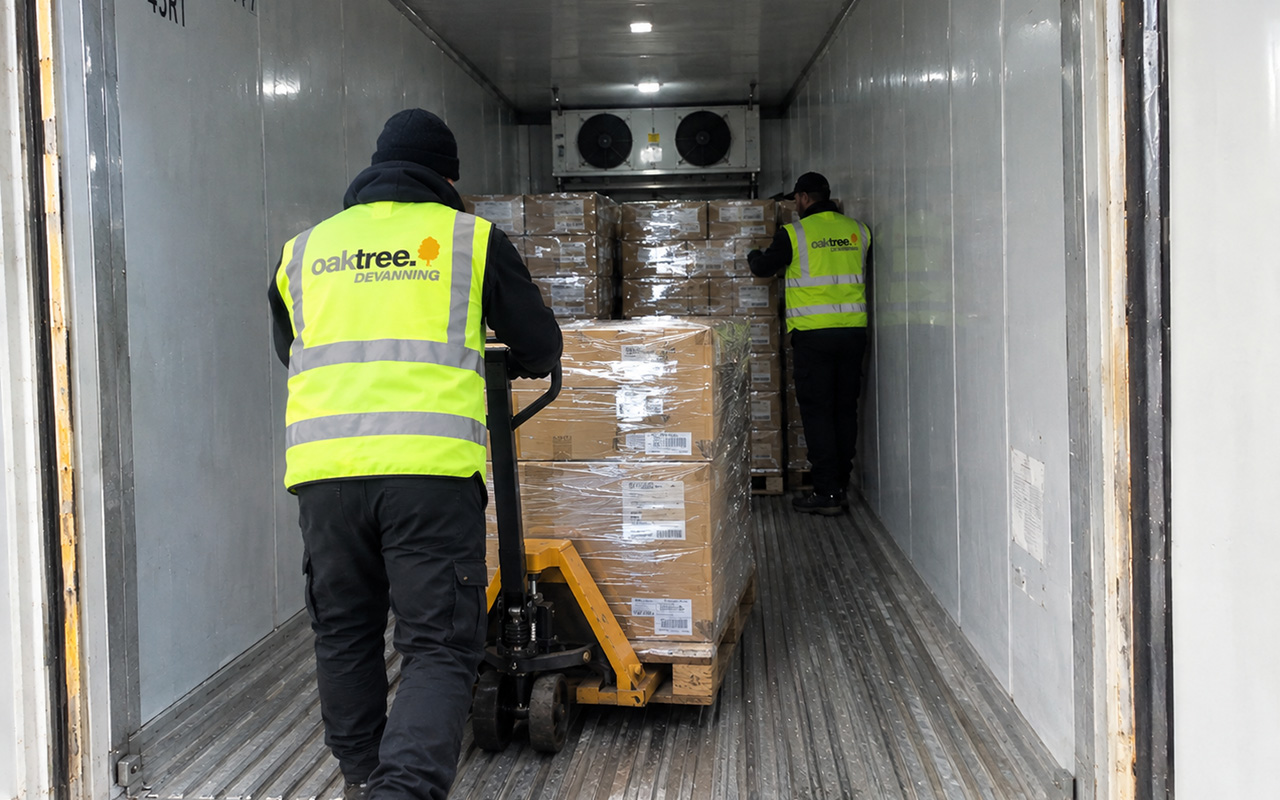
Our crews are inside cold storage facilities in Christchurch, Auckland and Brisbane every day, devanning the containers that end up feeding both countries. Road freight and the ports touch more of the food supply than any cold store ever will. But for anything chilled or frozen, which is a huge and growing share of what we eat, cold storage is what holds the whole system together. And almost nobody thinks about it.
The cold store is a battery, not a warehouse
Ships run late all the time. Harvests land bigger or earlier than planned, retail orders bounce around week to week, and none of it lines up. Something has to soak up the mismatch, and that job falls to the cold store.
It charges up when product floods in, whether that's meat season or a vessel that finally berthed three days late, and it discharges steadily as supermarkets and food service draw stock down. Take that battery out and everything has to run just-in-time with product that spoils in hours. One missed vessel and you've got empty shelves.
Both sides of the Tasman feel this. New Zealand exports enormous volumes of meat and dairy and imports plenty of frozen and chilled product back the other way, and both directions flow through the same cold stores, often at the same time. Container loading for export happens on the same docks where imports are devanned, and export season alone can push facilities close to capacity while the imported food still has to fit somewhere. Australia runs on scale: the Port of Melbourne sees around 1.4 million import containers a year, with similar numbers through Sydney and Brisbane, and every chilled or frozen box among them ends at a cold store door.
Container devanning is the pressure point
The bit we know best is the unload itself. Devanning, for anyone outside the trade, is the unloading of shipping containers: product out, onto pallets, wrapped and put away. In Australia the same job mostly goes by container unloading. In a cold store it comes with a deadline. A reefer container arrives and the moment those doors open, you're on the clock. The longer it sits open, the more the temperature drifts. Getting product out quickly is food safety.
Things do go wrong. Product sits on a dock and drifts out of its temperature window. A mixed pallet turns a tidy putaway into a mess, and damage nobody spotted comes back as a claim weeks later, with everyone pointing fingers. The unload is also where biosecurity lands, with MPI checks in New Zealand and DAFF requirements in Australia, so a crew that knows the rules at the door saves a lot of grief.
The fix is unglamorous, which is probably why it's rare. Photograph every job and track every container. When something goes sideways, and eventually something will, you want photos and a quick answer, not an argument about whose fault it was. Cold storage operators run on trust, and anyone devanning inside their facility earns it one container at a time.
Container unloading robots are coming, slowly
And yes, container unloading robots are real. As of 2026, we believe they're still three to five years away from being practical at scale in New Zealand and Australia. Freezer temperatures, mixed loads and slipsheets are genuinely hard for a machine.
So for now, the cold chain runs on people willing to work hard in sub-zero rooms.
Next time you pull a bag of frozen peas out of the freezer, remember it came in on a reefer, sat in a cold store that soaked up all the bad timing, and got devanned at pace by a crew in the cold.
If you run a cold store or import chilled or frozen product, the weakest point in your chain is usually the unload. Get that right and the chain holds.
Oak Tree Devanning unloads at a fixed cost per container, with crews in Christchurch, Auckland and Brisbane, and every job tracked and photographed in ProDevan. Get in touch for a quote, or call 0508 OAK TREE in New Zealand and 1300 4DEVAN in Australia.