

MENU
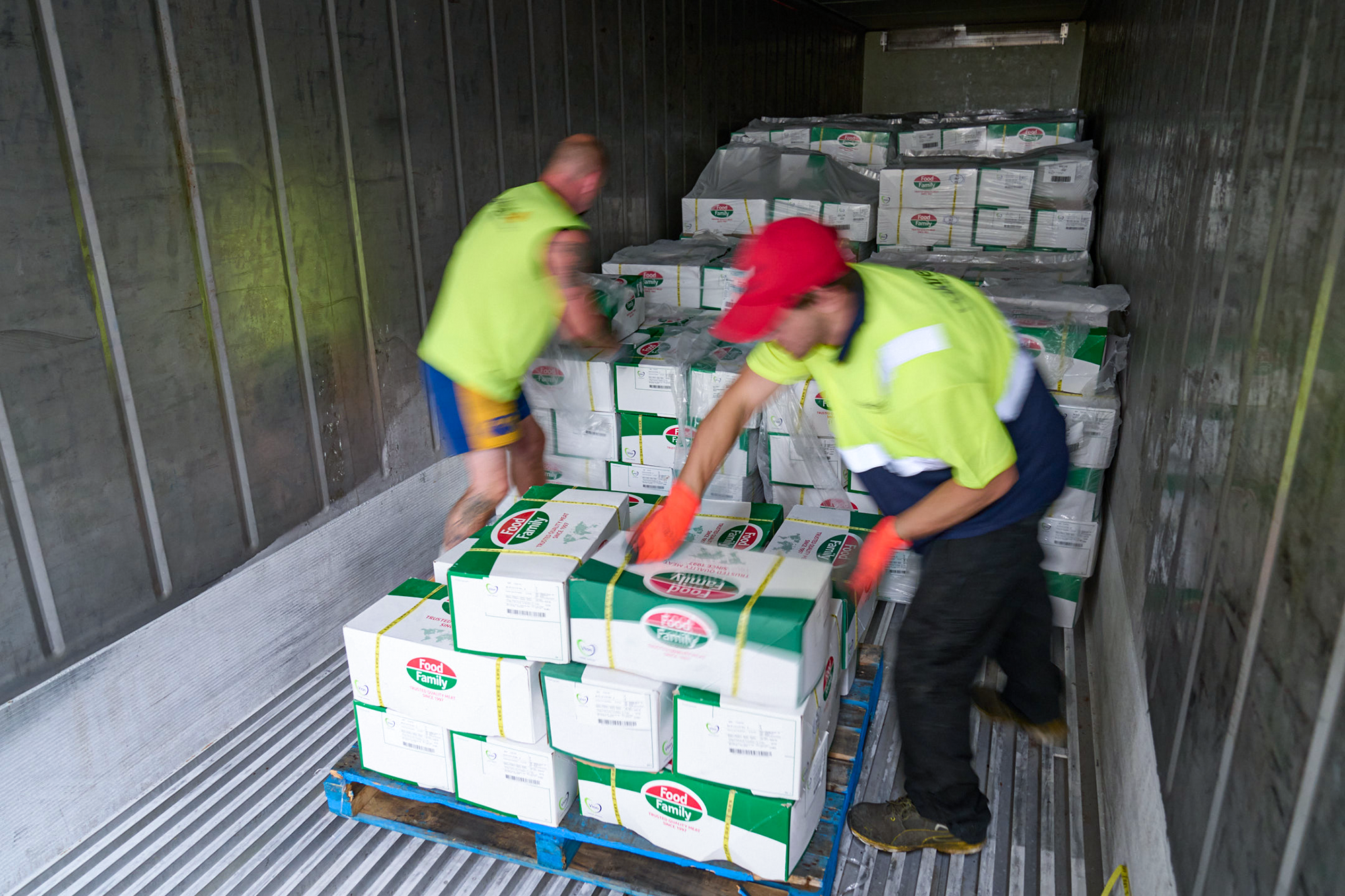
Container devanning is the process of manually removing goods from a shipping container and staging them ready for storage or dispatch. Also known as container unloading, it is the final step in the import journey: getting product out of the steel box and onto warehouse shelves. In New Zealand, the terms devanning and container unloading are used interchangeably.
Almost all container devanning involves loose-loaded, hand-unloaded cargo. Unlike palletised freight that can be moved by forklift directly, most imported goods arrive stacked inside the container floor-to-ceiling and have to be removed by hand, carton by carton.
The container doors are opened and the load is assessed. A devanning crew enters and begins working from the front toward the doors, lifting and palletising cargo by SKU as they go. This physical handwork, passing or carrying goods out of the container, is known as handballing. A forklift operator works alongside, extracting completed pallets and keeping empty pallets supplied into the container. A professional crew will shrink-wrap completed pallets on the spot rather than transporting them to a stationary wrapping machine, which keeps the flow moving and reduces dead time.
The physical size of the container is only a starting point. The real cost drivers are:
Volume and weight. There is a significant difference between 1,000 lightweight cartons and 3,500 heavy boxes. Experienced providers price by volume and weight brackets rather than container size alone.
SKU complexity. A single-SKU container where every box is identical moves faster than one with multiple product types that need to be sorted and palletised separately.
Staging area. The closer the staging area to the container doors, the faster the flow. If a forklift has to travel an extra 50 to 100 metres per pallet, dead time builds quickly.
Load quality at origin. A tipped container, where cargo has collapsed during ocean transit, requires additional time and care to clear safely.
For more on the cost of container unloading: The Hourly Rate Trap
A three-person crew should clear a standard 40-foot container loaded with 2,500 cartons and five or fewer SKUs in three to four hours. The crew is typically two workers inside the container handballing cargo onto pallets, and one on the forklift to clear staged product. The benchmark varies by crew type:
Crew type | Time to clear
Elite fixed-rate crew | 3 hours
Standard baseline | 4 to 4.5 hours
Casual hourly crew | 5.5 hours or more
The difference comes down to how the crew is structured and paid. A piece-rate crew has a direct financial incentive to move efficiently. A casual hourly crew does not.
Oak Tree Devanning provides container unloading and logistics labour hire across New Zealand, with crews based in Christchurch and Auckland. Container unloading in Christchurch serves Canterbury's wholesale, retail, and FMCG sectors. More than 431,000 containers moved through Lyttelton in the last financial year, with demand growing as the Hornby Quadrant logistics hub continues to expand.
Oak Tree has specialised in devanning since 2002 and operates on a fixed-rate-per-container model, with jobs tracked through ProDevan, its purpose-built job management platform.
What is the difference between container devanning and container unloading? No practical difference. The terms describe the same service. Devanning is more common in New Zealand; container unloading is used more widely in Australia and internationally.
Can I get container unloading in Christchurch? Yes. Oak Tree Devanning has provided container unloading in Christchurch since 2002. Get in touch for a quote.
What is logistics labour hire in New Zealand? Logistics labour hire refers to the supply of trained workers for warehouse and freight tasks on a contract basis. Oak Tree provides logistics labour hire for container unloading across Christchurch and Auckland, on a fixed-rate model rather than a standard hourly arrangement.